

Customer experiences in banking have become the defining factor that separates thriving financial institutions from those losing members to competitors. While traditional banks focused on basic transactions, today's credit unions and community banks must deliver seamless, personalized interactions across every touchpoint.

The difference between customer experience and customer service often confuses even seasoned banking professionals. Understanding this distinction—and knowing which to prioritize—can transform how your institution attracts and retains members.
What Are Customer Experiences in Banking?
Customer experiences encompass every interaction a member has with your financial institution, from the moment they first hear about you until they become loyal advocates. This includes digital touchpoints like your mobile app, physical interactions at branch locations, phone conversations with support staff, and even how quickly you process loan applications.
In banking, customer experiences go far beyond individual service encounters. They represent the cumulative impression formed through countless micro-interactions: how intuitive your online banking platform feels, whether your ATM network meets member needs, and if your staff remembers returning customers by name.
The Complete Customer Journey in Banking
The banking customer experience spans multiple phases:
- Discovery Phase: How potential members first learn about your institution through marketing, referrals, or community presence
- Onboarding Experience: Account opening processes, initial product education, and first-time user guidance
- Daily Banking Interactions: Routine transactions, mobile app usage, customer service contacts, and problem resolution
- Growth Opportunities: Cross-selling moments, financial education, and relationship deepening
- Advocacy Development: Creating experiences so positive that members actively refer others
Customer Experience vs. Customer Service: What's the Difference?
The distinction between customer experience and customer service fundamentally changes how banks approach member relationships. Customer service represents specific interactions when members need help—calling about a fee, visiting a branch for account questions, or chatting online about technical issues.
Customer experience encompasses the entire relationship journey, including moments when members never directly interact with staff. It covers how quickly your mobile app loads, whether your website provides answers before members need to call, and if your automated systems work seamlessly behind the scenes.
Key Differences Between Experience and Service
| Aspect | Customer Service | Customer Experience |
|---|---|---|
| Scope | Individual interactions and problem-solving | Complete relationship journey across all touchpoints |
| Timing | Reactive - responds to member needs | Proactive - anticipates and prevents issues |
| Measurement | Call resolution time, satisfaction scores | Net Promoter Score, retention rates, lifetime value |
| Ownership | Customer service department | Every department and system |
| Impact | Solves immediate problems | Builds long-term loyalty and advocacy |
| Technology Role | Support tools and ticketing systems | Integrated platforms, automation, and data analytics |
Customer service excellence can resolve individual problems effectively, but superior customer experiences prevent many problems from occurring while creating emotional connections that drive member loyalty.
Why Customer Experience Matters for Credit Unions and Community Banks
Credit unions and community banks face unique challenges that make customer experience critical for survival. Unlike large national banks with massive marketing budgets, smaller financial institutions rely on member satisfaction and word-of-mouth referrals to drive growth.
Members expect the same digital convenience they receive from major banks while valuing the personal relationships that define community banking. This creates pressure to deliver both technological sophistication and human connection—a combination that requires exceptional customer experience design.
The Competitive Advantage of Superior Experiences
Outstanding customer experiences provide measurable benefits for community financial institutions:
- Higher Member Retention: Institutions with top-quartile customer experience scores see 25% lower member churn rates
- Increased Cross-Selling Success: Members with positive experiences purchase 40% more products over their lifetime
- Reduced Service Costs: Proactive experience design prevents up to 60% of routine service calls
- Stronger Referral Generation: Satisfied members generate 3x more referrals than those with neutral experiences
Digital vs. In-Person Customer Experience
Modern banking requires excellence across both digital and physical channels, but the emphasis differs based on member demographics and preferences. Digital experiences now drive first impressions for most potential members, while in-person interactions remain crucial for complex financial decisions and relationship building.
Digital Experience Priorities
Digital banking experiences must prioritize speed, intuitive design, and seamless functionality. Members expect to complete routine transactions without friction while accessing comprehensive account information instantly.
Key digital experience elements include:
- Mobile App Performance: Fast loading times, intuitive navigation, and comprehensive feature sets
- Online Banking Security: Robust protection that doesn't sacrifice usability
- Digital Onboarding: Streamlined account opening with minimal documentation requirements
- Self-Service Capabilities: Comprehensive help resources and automated problem resolution
In-Person Experience Excellence
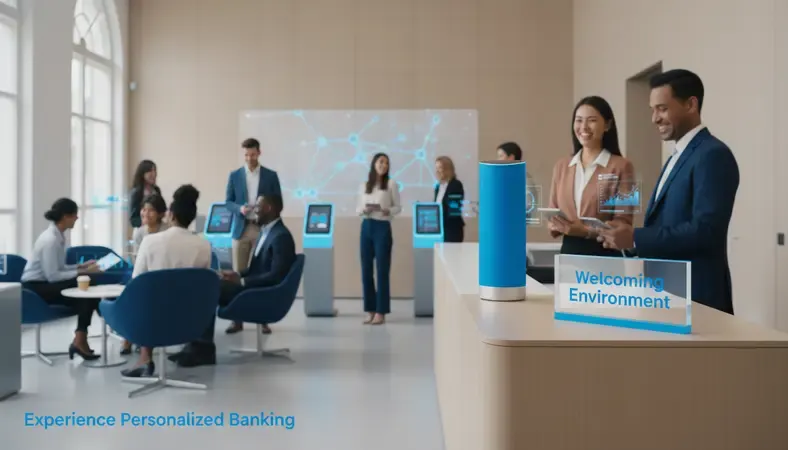
Physical branch experiences remain vital for relationship building and complex service needs. The most successful community banks create environments where members feel valued and understood.
Critical in-person experience factors include:
- Staff Knowledge and Empowerment: Team members who can resolve issues without multiple handoffs
- Personalized Recognition: Systems that help staff remember member preferences and history
- Comfortable Environment: Welcoming spaces designed for conversation and consultation
- Efficient Processes: Minimal wait times and streamlined procedures for routine transactions

How to Improve Customer Experience at Your Bank
Improving customer experiences requires systematic assessment of current touchpoints followed by strategic improvements based on member feedback and behavioral data. The most effective approach combines quick wins with long-term strategic initiatives.
Assessment and Planning Phase
Start by mapping your complete customer journey from initial awareness through long-term advocacy. Identify every touchpoint where members interact with your institution, including digital platforms, physical locations, communication channels, and behind-the-scenes processes.
- Journey Mapping: Document every step in the member lifecycle, noting potential friction points and emotional moments
- Data Collection: Gather quantitative metrics (transaction times, abandonment rates, call volumes) and qualitative feedback (surveys, interviews, social media comments)
- Gap Analysis: Compare current performance against member expectations and competitor benchmarks
- Priority Setting: Focus on improvements that deliver maximum impact for member satisfaction and operational efficiency
Implementation Strategies
Successful customer experience improvements require coordination across departments and consistent execution over time. Focus on changes that create immediate positive impact while building foundation for long-term enhancements.
Technology integration: Implement systems that provide consistent member information across all channels. Staff should access complete member history whether interacting by phone, email, or in person.
Process streamlining: Eliminate unnecessary steps in common member interactions. Simple changes like pre-filling forms with known information or reducing required signatures can significantly improve experiences.
Staff Training and Empowerment: Equip team members with authority to resolve common issues immediately rather than requiring supervisor approval for routine exceptions.
Feedback loops: Create systems for capturing and acting on member feedback in real-time rather than waiting for quarterly surveys.
Examples of Excellent Banking Customer Experiences
The most memorable banking experiences combine efficiency with personal touch, demonstrating understanding of individual member needs while delivering consistent service quality.
Digital Excellence Examples
Proactive communication: Sending automatic alerts before fees are charged, notifying members of suspicious activity, or providing spending insights that help with budgeting decisions.
Intuitive problem resolution: Mobile apps that anticipate common questions and provide answers before members need to search or call for help.
Seamless integration: Systems where starting a transaction on mobile can be completed at an ATM or branch without re-entering information.
Personal Service Examples
Relationship continuity: Staff who remember member preferences and can reference previous conversations to provide contextual service.
Flexible solutions: Loan officers who understand local market conditions and can structure financing that meets unique member circumstances.
Community connection: Financial education programs tailored to local demographic needs and delivered through convenient channels.
Measuring and Tracking Customer Satisfaction
Effective customer experience measurement combines multiple data sources to provide comprehensive insights into member satisfaction and loyalty. Traditional metrics like satisfaction scores provide snapshots, while behavioral data reveals actual member sentiment through actions.
Key Performance Indicators
| Metric | What It Measures | Target Range |
|---|---|---|
| Net Promoter Score (NPS) | Likelihood to recommend your institution | 50+ (excellent), 30-50 (good) |
| Customer Effort Score (CES) | Ease of completing transactions | 5+ on 7-point scale |
| First Call Resolution | Percentage of issues resolved without callbacks | 80%+ |
| Digital Adoption Rate | Members actively using online/mobile services | 75%+ |
| Cross-sell Success | Additional products per member relationship | 3+ products per household |
| Member Retention Rate | Annual percentage of members who remain active | 95%+ |
Advanced Analytics Approaches
Beyond basic satisfaction surveys, successful institutions track behavioral indicators that predict member loyalty and identify at-risk relationships before problems escalate.
Engagement scoring: Combine transaction frequency, digital usage, and service interactions to identify member engagement levels and predict future behavior.
Journey analytics: Track completion rates and abandonment points across key processes like account opening, loan applications, and service requests.
Sentiment analysis: Monitor social media mentions, review sites, and email communications for early warning signs of dissatisfaction.
Key Insight: Members who actively use three or more products and engage digitally at least twice monthly show 90% higher retention rates and generate 60% more referrals than single-product relationships.
Common Questions About Customer Experiences
What's the difference between customer experience and user experience?
Customer experience encompasses the complete relationship between a member and your institution across all touchpoints and time periods. User experience specifically focuses on how people interact with digital interfaces like websites and mobile apps. User experience is one component of the broader customer experience strategy.
How quickly can banks see results from customer experience improvements?
Simple operational changes like reduced wait times or streamlined processes can show measurable results within 30-60 days. Comprehensive experience transformations typically require 6-12 months to fully implement and demonstrate significant impact on member satisfaction and retention metrics.
Should small banks try to match big bank digital experiences?
Community banks should focus on delivering digital experiences that meet member expectations while leveraging their relationship advantages. Rather than copying large bank features, prioritize intuitive functionality and personal touches that reflect your institution's values and member base needs.
How do you balance automation with personal service?
The most effective approach uses automation for routine transactions and information requests while ensuring easy access to human assistance for complex needs. Implement systems that recognize when automated solutions aren't meeting member needs and seamlessly transfer to personal service.
What role does branch design play in customer experience?
Physical space significantly impacts member perceptions and comfort levels. Modern branch design should facilitate both efficient transactions and comfortable conversations, with technology that enhances rather than replaces human interaction. Consider how layout, lighting, and furniture choices support your desired member experience.
How can Member Referral Programs improve customer experience?
Well-designed referral programs create positive experiences for both existing members and new prospects by streamlining introductions and providing valuable incentives. When integrated with customer experience initiatives, referral programs can amplify satisfaction by making members feel valued for their loyalty and advocacy.
Wrapping Up
Customer experiences determine whether your institution thrives or merely survives in today's competitive banking landscape. While excellent customer service resolves individual problems, superior customer experiences prevent issues while building lasting emotional connections that drive member loyalty and advocacy.
Transform your member relationships at FinIT Refer — turn everyday banking behaviors into automated member acquisition and engagement that grows your institution without campaigns or spreadsheets. Ready to get started? Visit FinIT Refer to learn more.


